
AI Customer Experience in 2026: How Artificial Intelligence Is Reshaping CX

Customer experience has always been a competitive differentiator. But in 2026, AI didn’t just refine the playbook—it tore it up and wrote a new one. From predictive analytics to natural-language interfaces that let product teams ask plain-English questions about user behavior, AI is fundamentally changing how businesses collect, interpret, and act on customer data.
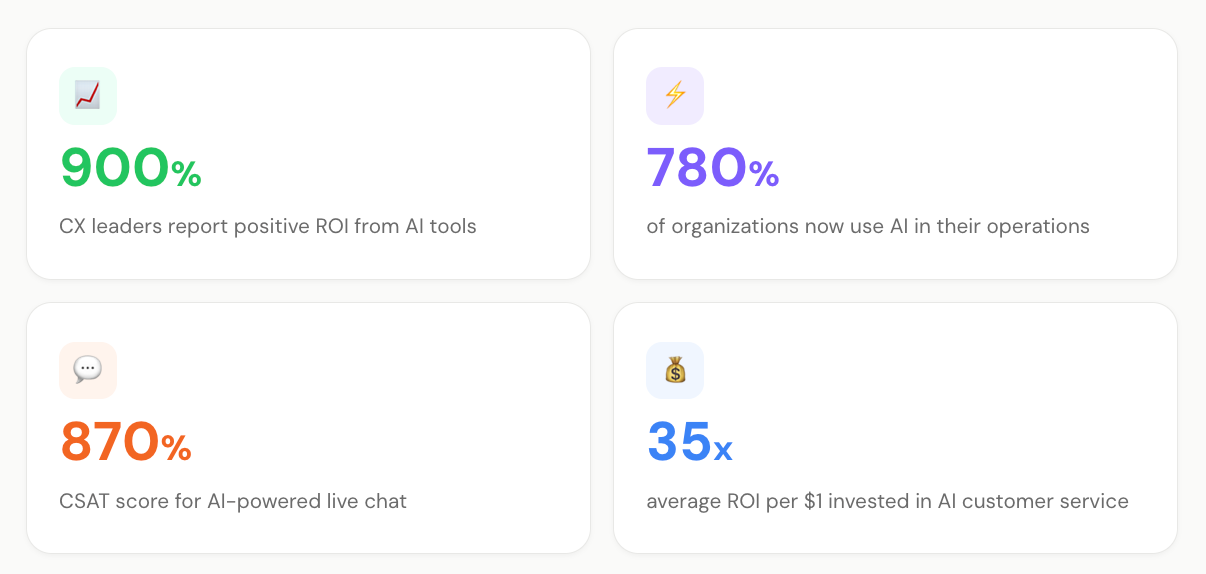
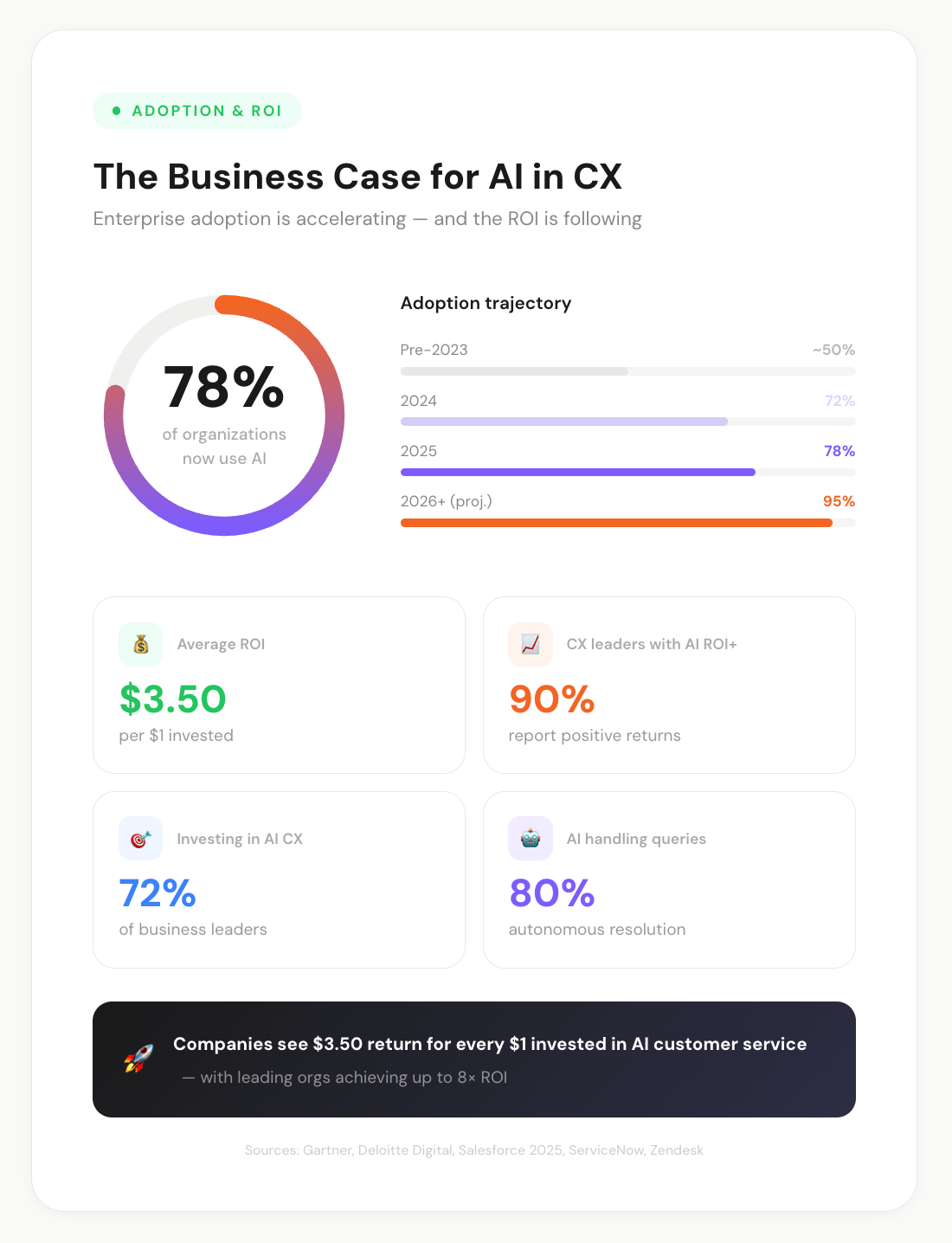
The numbers tell a convincing story. According to Gartner, 80% of executives now use AI technology in their strategies and business decisions. Meanwhile, Salesforce reports that 90% of CX leaders see positive ROI from implementing AI tools for customer service. And with the AI customer service market projected to reach $47.82 billion by 2030 (growing at a 25.8% CAGR), it’s clear that AI-driven customer experience isn’t a passing trend—it’s the new baseline.
This article explores what AI customer experience actually looks like in practice, where the data points toward, and how tools like LiveSession are helping product teams bridge the gap between raw analytics and genuine user understanding.
What Does AI Customer Experience Actually Mean?
AI customer experience refers to the use of artificial intelligence—machine learning, natural language processing, predictive modeling—to improve every touchpoint a customer has with your brand. That includes everything from the first time a visitor lands on your website to post-purchase support interactions and long-term retention strategies.
Unlike traditional analytics, which forces teams to define what they’re looking for before they start looking, AI flips the process. It surfaces patterns, anomalies, and opportunities automatically. Think of it as the difference between manually scanning spreadsheets and having someone tap you on the shoulder to say, “Hey, 40% of users rage-click your checkout button on mobile.”
This shift matters because customer expectations are climbing fast. Research from Zendesk shows that 78% of customers expect more personalization than ever before, and 72% expect immediate service resolution. Meeting those expectations at scale without AI isn’t just hard—it’s practically impossible.
For a deeper look at how customer experience analytics works in practice, our ultimate guide to CX analytics is a solid starting point.
The Data Behind the AI CX Revolution
Statistics sometimes feel abstract, but these ones paint a fairly concrete picture of where the industry is heading:
- Market growth: The AI-driven customer support agents market is expected to expand from $2.5 billion in 2024 to $53.3 billion by 2034, at a staggering 35.8% CAGR. North America alone holds 38.5% of the market share.
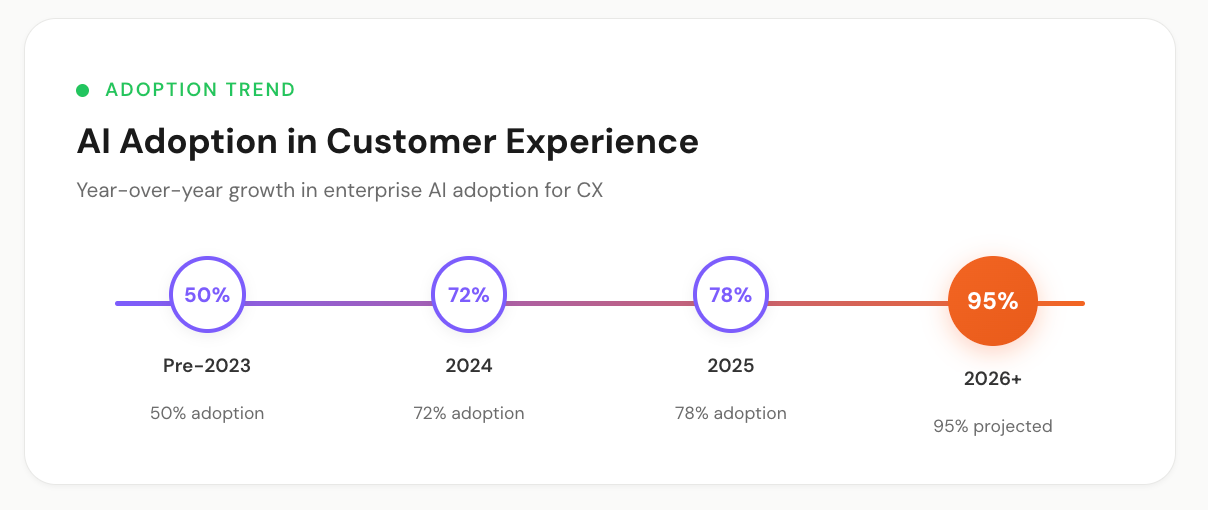
- Adoption rates: AI usage among organizations has climbed to 78%, up from 72% in 2024 and just 50% in the years before that. Nearly 80% of customer service leaders plan to invest more in AI over the next two years, according to Deloitte Digital.
- ROI evidence: Companies report an average return of $3.50 for every $1 invested in AI customer service. Two-thirds of business leaders say AI spending leads to significant improvements in their customer operations.
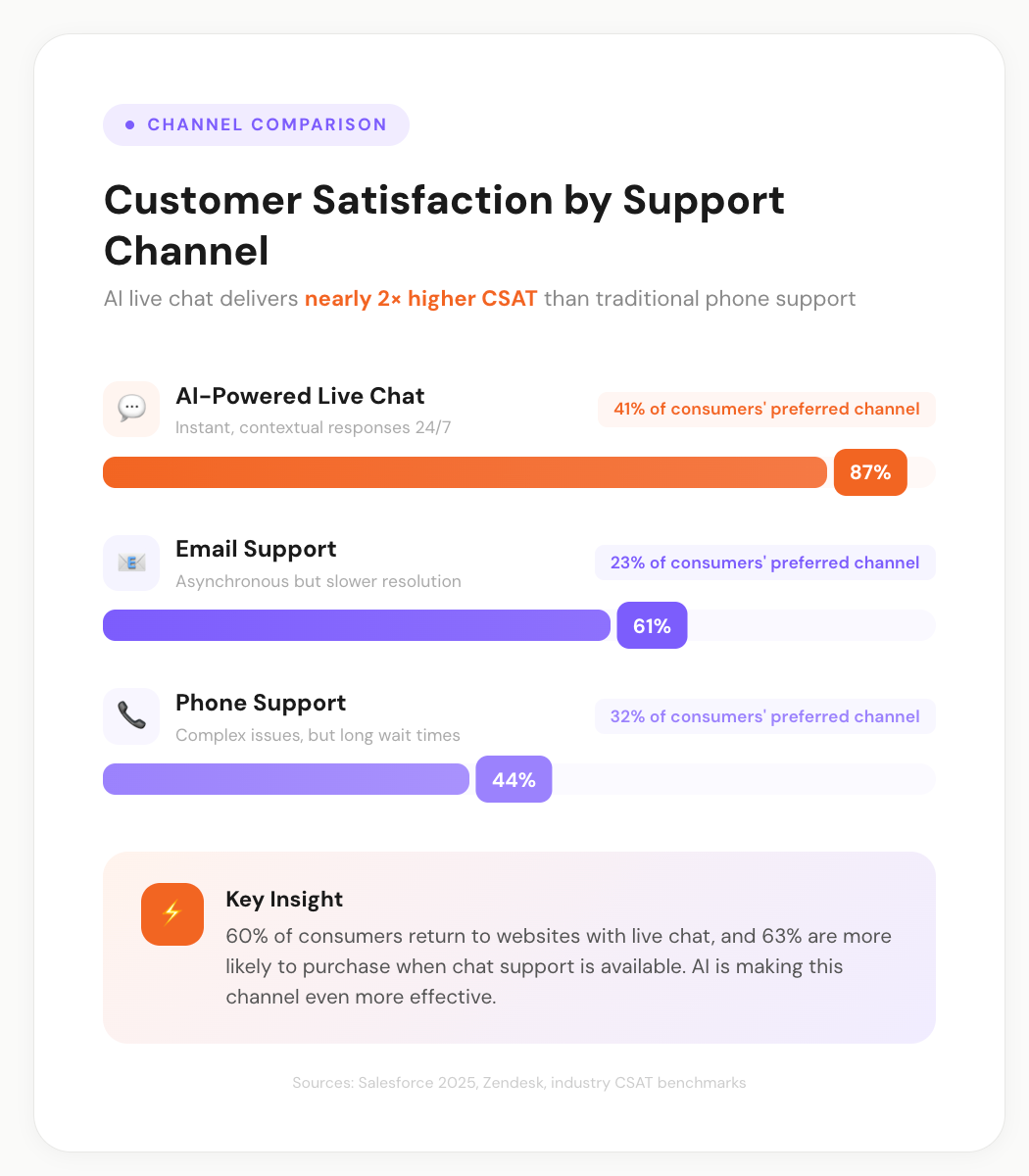
- Customer sentiment: 73% of shoppers believe AI can positively impact their experience, and 67% of consumers say they prefer using AI assistants for service requests. Live chat, powered increasingly by AI, achieves 87% customer satisfaction—outperforming email (61%) and phone (44%) by a wide margin.
- Resolution speed: ServiceNow reports that its AI agents handle 80% of support inquiries autonomously, achieving a 52% reduction in time needed for complex case resolution.
These figures point to one conclusion: AI isn’t supplementing customer experience strategies—it’s becoming the backbone.
If you want to track how these improvements translate into real user behavior on your own product, LiveSession’s product analytics suite offers the tools to connect the dots between AI-generated insights and actual session data.
Five Ways AI Is Transforming Customer Experience Right Now
1. Natural-Language Analytics: Ask Questions, Get Answers
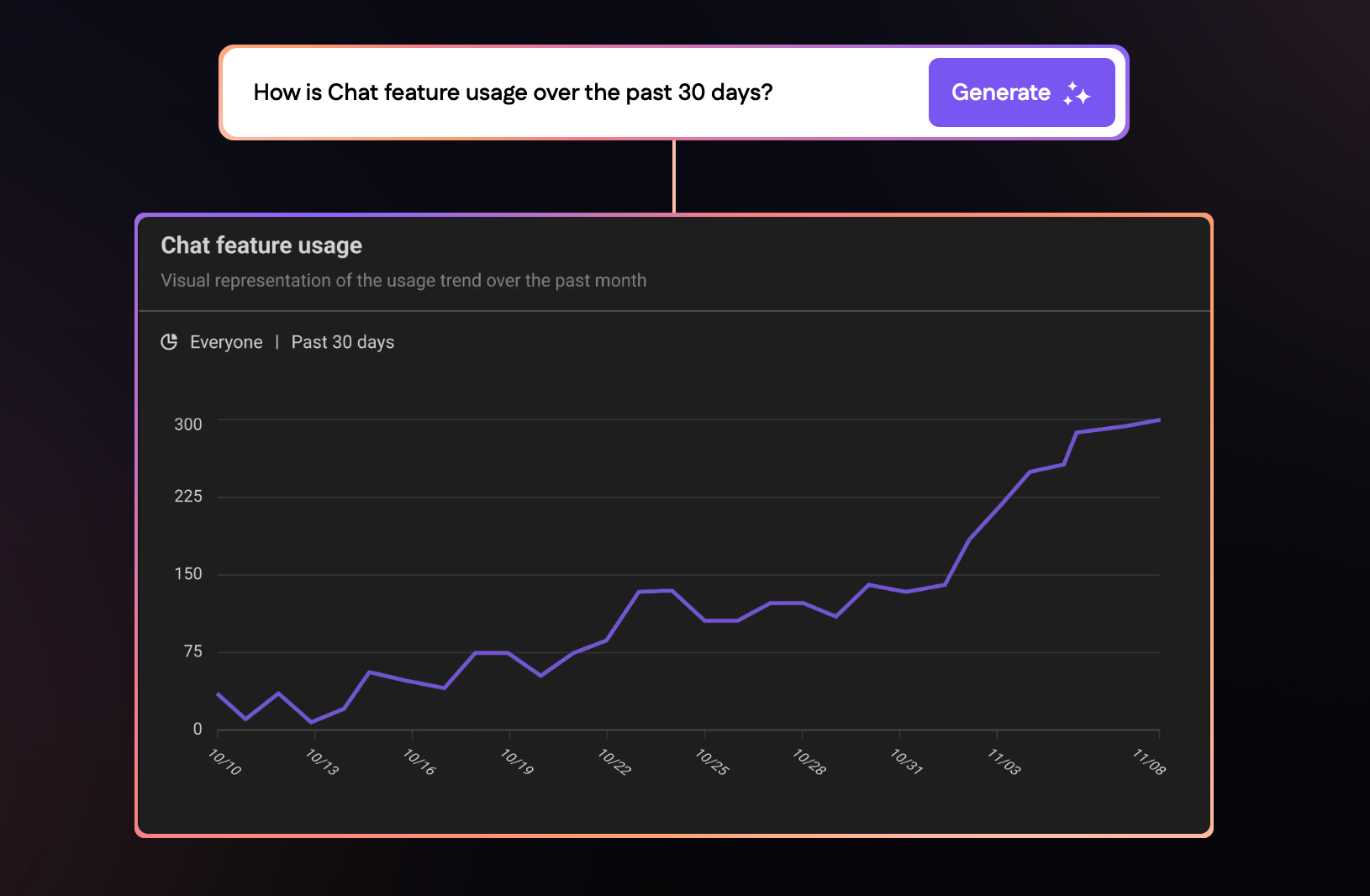
One of the most impactful shifts is the emergence of conversational analytics—the ability to ask a question in plain language and receive an immediate, data-backed answer. Instead of building custom reports or learning complex query languages, a product manager can simply type something like “How is Chat feature usage over the past 30 days?” and get a clear, actionable response.
This is exactly the approach behind LiveSession’s AI Insights feature. Described as “Even faster and easier with AI insights,” it lets teams use natural language to ask questions and get instant answers. The AI-generated metrics help you quickly understand user behavior and make data-driven decisions to improve your product—without needing a data analyst on speed dial.
For product teams managing complex agency content workflow tool setups or multi-product dashboards, this kind of frictionless access to data is transformative. It democratizes analytics, putting insights into the hands of everyone from designers to marketers.
2. Predictive Customer Behavior Modeling
AI doesn’t just tell you what happened—it forecasts what’s likely to happen next. Predictive models can identify at-risk users before they churn, flag accounts that are ready for upselling, and anticipate support tickets before a user even reaches out.
Forrester’s research found that organizations using data-driven approaches achieve six times better customer retention. When you combine predictive modeling with session replays that show the actual moments of friction, you get a complete picture: the quantitative “what” and the qualitative “why.”
3. AI-Powered Onboarding Optimization
First impressions are make-or-break for SaaS products. AI is transforming onboarding by analyzing how new users navigate early touchpoints and automatically identifying where they get stuck. Instead of waiting for support tickets or churn signals, AI surfaces friction in real time.
Whether you’re building an AI onboarding flow for a B2B platform or refining an e-commerce first-purchase experience, the combination of AI pattern recognition and behavioral analytics is proving to be immensely powerful. Tools like LiveSession let you track onboarding funnels step by step, watching where users drop off and correlating those drop-offs with specific UI elements or content gaps.
4. Automated Sentiment Analysis Across Channels
Traditional CSAT surveys have a fundamental problem: only about 3% of users respond, and the responses skew toward extreme experiences. AI changes this by analyzing every customer interaction—chat transcripts, support emails, session behavior—to calculate sentiment automatically.
This means CX teams can move from reactive (“Our CSAT dropped this quarter”) to proactive (“Users in segment X are showing frustration patterns during checkout—here’s what the session replays show”). For teams that want to build customer experience dashboards that surface these kinds of insights automatically, the integration of AI with behavioral analytics tools creates a powerful feedback loop.
5. Intelligent Self-Service and Knowledge Bases
Salesforce’s 2025 data shows that 61% of customers prefer using self-service resources for simple issues. AI makes self-service work by dynamically surfacing the right content at the right time, adapting to user context and behavior history.
For businesses handling complex product ecosystems—say, a distributor managing thousands of SKUs or 52 week lead time component planning and real-time inventory—AI-driven self-service can deflect a huge volume of routine queries. Pair this with heatmaps and clickmaps to understand how users interact with your knowledge base pages, and you can continuously optimize the self-service experience.
The Challenges: What the Data Also Tells Us
AI in CX isn’t a magic wand. The data also reveals some sobering challenges that businesses or even generative AI companies need to navigate carefully.
Trust is fragile. Only 42% of customers trust businesses to use AI ethically—down from 58% in 2023, according to Gartner. That’s a significant erosion of confidence, and it means transparency about how AI is used in customer interactions isn’t optional—it’s essential.
Data fragmentation remains a blocker. 38% of organizations identify fragmented customer data as a major obstacle to creating great experiences (CMS Wire). AI models are only as good as the data they’re trained on, so companies that haven’t unified their data stack will struggle to see real results.
Agent burnout is real. 77% of customer service reps say their workload has increased, and 56% report burnout. AI should augment human agents, not replace them while piling more complex edge cases onto a smaller team.
And 44% of organizations have experienced negative consequences from AI implementation—mostly from rushing the process without proper planning. The lesson? Start with clearly defined use cases, measure impact from day one, and iterate.
LiveSession’s approach to leveraging analytics for customer experience provides a useful framework: combine quantitative data with qualitative session replays to validate that your AI-driven changes are actually improving the user experience—not just optimizing metrics in a vacuum.
How to Build an AI-Driven CX Strategy That Actually Works
Based on what the data tells us and what leading organizations are doing, here’s a practical approach to integrating AI into your customer experience strategy:
Start with behavior, not assumptions.
Before deploying AI models, you need to understand how your users actually behave. Session replays, heatmaps, and funnel analysis give you a ground-truth baseline. LiveSession’s visitor tracking and analytics capabilities are designed specifically for this—capturing real user interactions without relying on self-reported data.
Layer AI on top of behavioral data.
Once you have solid behavioral data, AI can do what it does best: pattern recognition, anomaly detection, and predictive modeling. LiveSession’s AI Insights feature will embody this approach. You ask a question in natural language, and the AI agent generates the metric—pulling from the behavioral data you’re already collecting.
Close the loop with qualitative validation.
Numbers tell you what happened. Session replays tell you why. The most effective CX teams use AI to identify patterns, then watch the actual sessions to validate their hypotheses before making changes. This is a workflow that maps naturally onto tools for OpenClaw deployment service providers and SaaS platforms alike—anywhere the gap between analytics and understanding matters.
Measure, iterate, repeat.
84% of CRM leaders see AI as crucial for interacting with modern customers. But successful implementation requires continuous measurement. Set up dashboards and metrics to track the impact of every AI-driven change, and be prepared to adjust your approach based on what the data shows.
Where AI Customer Experience Is Headed
The trajectory is clear. CX leaders expect that over 75% of customer interactions will be resolved through automated systems without human assistance (Zendesk 2025). Meanwhile, 70% of global CEOs consider generative AI a transformative technology for how businesses create value within the next three years (PwC 2024).
Multimodal AI is emerging as the next frontier—systems that don’t just handle text but can process images, voice, and video in real time. The chatbot market alone is expected to grow by $11.45 billion by 2026, fueled by advances in natural language processing that make AI interactions feel genuinely conversational rather than robotic.
For product teams, this means the tools you choose today need to be forward-compatible. They need to support AI-driven insights alongside traditional analytics, work across multiple channels, and offer the flexibility to evolve as AI capabilities mature. It’s why platforms like LiveSession that combine session replays, funnels, heatmaps, and AI-powered insights in a single interface are well-positioned for what’s coming next.
4 AI tools improving different parts of customer experience
1. LiveSession for understanding customer behavior
LiveSession combines product analytics, session replay, heatmaps and AI-driven insights to help teams understand how customers actually use a website or product. It is especially useful for finding friction points and validating whether CX changes improve real behavior.
Use if you are: Product and CX teams analyzing digital customer behavior.
2. Respond.io for AI-powered customer conversations
Respond.io is a customer conversation platform for high-volume, mid-market B2C businesses where conversations drive revenue. It brings chats, calls and emails into one workspace while preserving context as customers move between channels.
Its AI Agents can qualify leads, follow up, update lifecycle stages, route conversations and hand high-value opportunities to human teams.
Use if you are: B2C businesses managing large volumes of revenue-critical customer conversations.
3. Klaviyo for personalized lifecycle communication
Klaviyo helps ecommerce brands use customer and behavioral data to personalize lifecycle communication across channels such as email and SMS. Automated flows can support onboarding, post-purchase engagement, win-back campaigns and repeat purchases.
Use if you are: Ecommerce teams using lifecycle messaging to improve retention.
4. Qualtrics for customer feedback and experience measurement
Qualtrics helps organizations collect and analyze customer feedback through surveys and experience-management programs. Teams can use it to track metrics such as NPS and CSAT and identify changes in customer sentiment.
Use if you are: Organizations that need structured customer feedback and CX measurement.
The Bottom Line
AI customer experience isn’t about replacing human judgment—it’s about amplifying it. The data overwhelmingly shows that businesses investing in AI-driven CX are seeing faster resolution times, higher satisfaction scores, and measurably better retention rates. But the technology works best when it’s paired with genuine behavioral understanding.
That’s the core philosophy behind LiveSession’s AI Insights: use natural language to ask questions, get instant answers, and connect those answers to real session data. Whether you’re debugging a checkout flow, optimizing onboarding, or trying to figure out why engagement on a specific feature dropped last week, the combination of AI and behavioral analytics gives you both the speed and the depth you need to act with confidence.
Ready to see what AI-powered analytics can do for your product? Start your free 14-day trial of LiveSession and experience the difference between guessing and knowing.
Related articles

Get Started for Free
Join thousands of product people, building products with a sleek combination of qualitative and quantitative data.